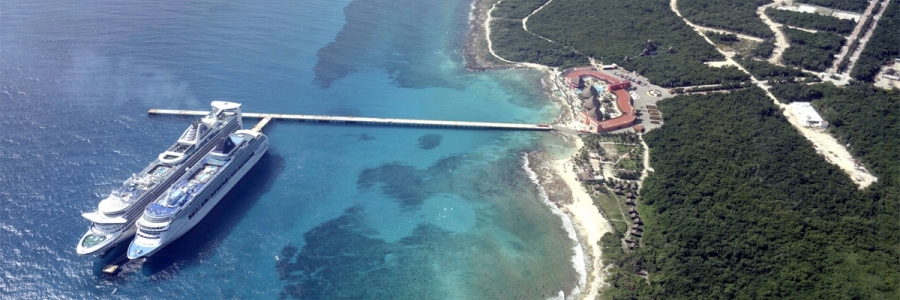
About Costa Maya
Mexico’s Costa Maya is located on the southern coast of the state of Quintana Roo, and includes 130 km (80 miles) of pristine coastline and 39,500 hectares of lush tropical forests. Located in the heart of the Mayan world, the Costa Maya is referred to as the “last frontier”. This is the southernmost area of the Yucatan peninsula, located just north of Belize.
The Costa Maya is defined largely by the two small towns of Mahahual and Xcalak. With the coming of the cruise ships, Mahahual is positioned to take off, much like its sister, Playa del Carmen, to the north. Xcalak is one of the top flats and bone fishing areas in the world. Scuba divers and snorkelers’ are attracted to Xcalak to enjoy the superb diving on the world’s second largest barrier reef.
The people are very friendly, and the town is stable, growing and the area is also very safe and convenient. Costa Maya is culturally stimulating with several Mayan villages and archeological ruins in the vicinity. Costa Maya is also very eco-friendly with many diving and fishing resorts, and nearby eco-water parks. Costa Maya is not an island like Cozumel, which means it is connected to mainland utilities and other services. Costa Maya is located just about an hour away from Chetumal, the capital of the state and the second largest city in Quintana Roo, with shopping, movies, internet cafes, night life, and decent healthcare, so that you can quickly satisfy any need you might have.
Oceanfront real estate property is still very affordable, and building costs are inexpensive in Costa Maya and Mahahual. Costa Maya also has a protective barrier reef, the second largest barrier reef in the world, running its entirety which helps prevent erosion, unlike Riviera Maya. The area also features something unique: Banco Chinchorro. This is an atoll reef just lying off the coast of Mahahual, famous for its in-land fauna (iguanas, crocodiles and a few other amazing creatures) as well as kayaking, snorkeling and diving activities. It is common to see Lion Fish, lobsters and some other amazing Caribbean Sea inhabitants. With a considerable number of incomparably beautiful, untouched beaches, internal lagoons, cenotes in the middle of the jungle, an abundance of wildlife, and a vibrantly alive reef, Costa Maya holds a promise for all those looking for a potential investment with business in mind, as well as for nature lovers seeking a secluded spot to relax and enjoy life on the beach.
The Costa Maya is a government sponsored investment to rejuvenate the economy of the southern part of the State of Quintana Roo. As government improvements along the Costa Maya progress, real estate prices continue to rise, but are still well below the prices to the north. Improvements include new roads and highways, fiber optics, electricity, marinas, and three airports. Major private sector improvements include a cruise ship dock, an oceanfront shopping mall, resort hotels, a beach club/marina, and professional golf course. Between 1997 and 2002, Playa Del Carmen became the fastest growing city in the world with over 5,000,000 tourists each year. In its 2003 Summer Report, AMDENTUR (Asociación Mexicana de Desarrolladores Turísticos) reported an increase in real estate sales values that almost tripled for this time period. The Costa Maya is being developed by the same Federal and State Development Agencies that developed Playa Del Carmen and Cancun. A spike in real estate transactions has already been seen in the Costa Maya region and it is estimated that real estate values in the Mahahual area will outperform those of its northern counterparts.
The Mexican government is committed to Costa Maya’s success. Millions of dollars have been invested to build new roads and highways and install electric utility lines. In place are low-density zoning and environmental restrictions to protect the natural beauty of the area. Costa Maya has wetlands and lagoons running along the entire coastline, and is very eco-friendly. The natural splendor and the weather make Costa Maya a “Paradise in the Caribbean.”